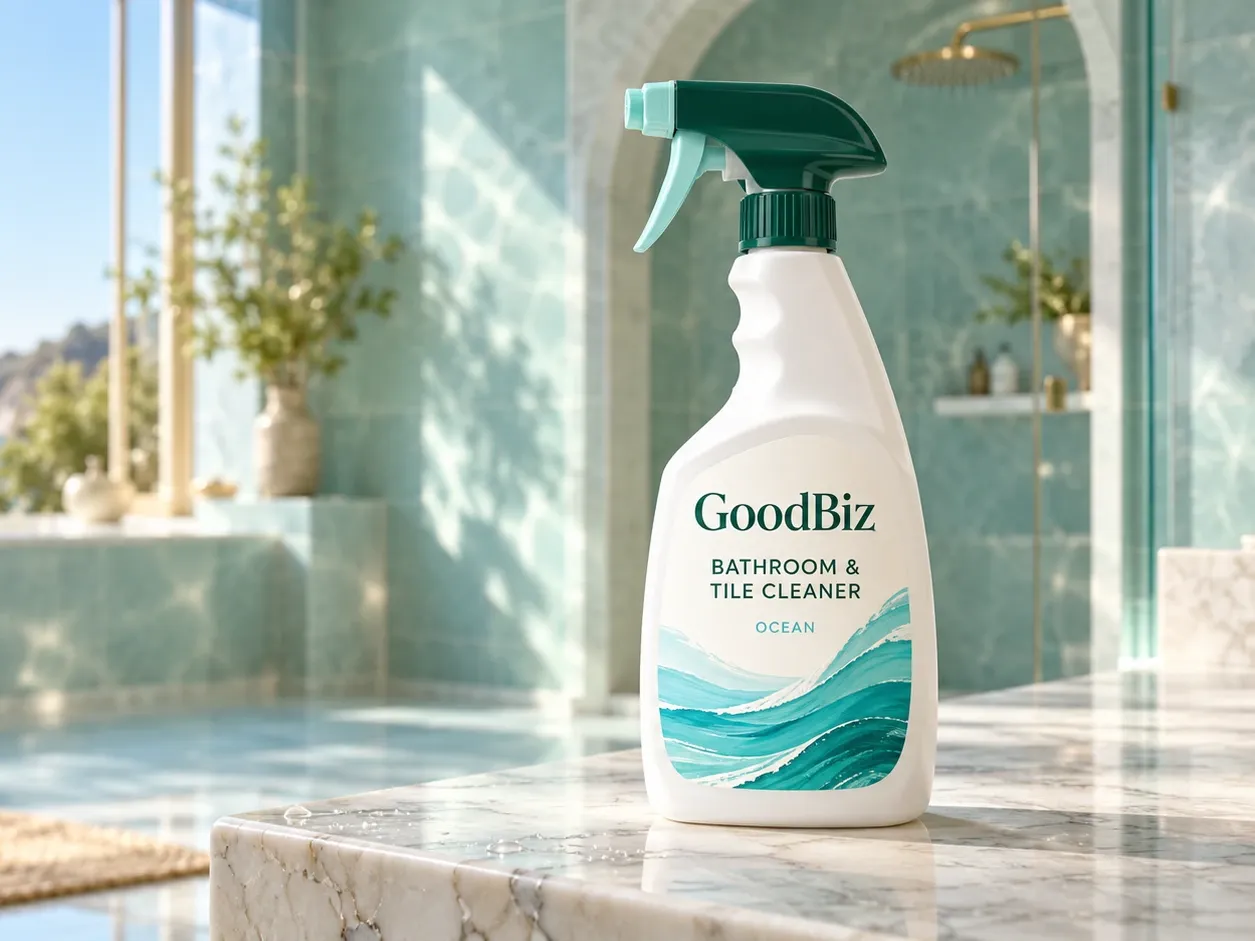
Walk down the cleaning aisle in many markets and you will find two very different kinds of product sitting close together. One is the familiar milky-white herbal phenol or phenyl, mopped across floors and poured down drains for its strong scent. The other is a chemical disinfectant, sold around a named active ingredient and positioned for hygiene. Retail buyers often treat them as interchangeable, and that is where problems start: with labels, with customs paperwork and with customer expectations.
This guide sets the two side by side in a balanced way. GoodBiz Hygiene is a merchant exporter. We source cleaning products from vetted Indian manufacturers and manage the quotation, documents and shipment. What follows is general buyer guidance, not legal or regulatory advice, and your own country’s rules always have the final word.
What herbal phenol actually is
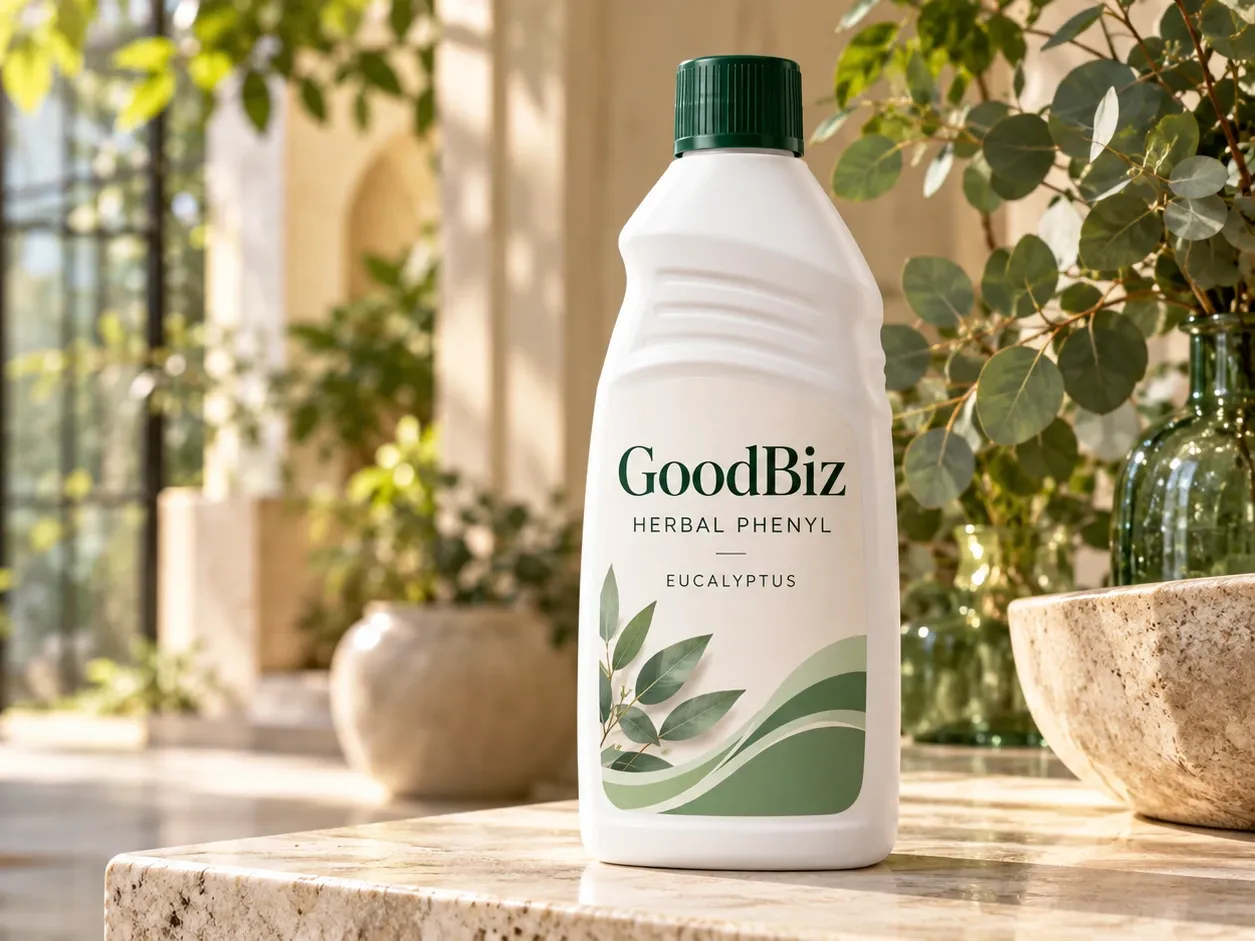
Herbal phenol, also sold as phenyl, is a concentrated liquid made with plant-derived oils such as pine, neem, eucalyptus or lemongrass, blended with emulsifiers. When it meets water it turns milky white. In households and small businesses it is mainly used to mop floors and to freshen drains, bathrooms and toilets.
Two things define its appeal to shoppers. The first is fragrance: the scent is strong and lasts after the floor dries. The second is tradition: in many South Asian, Middle Eastern and African homes, a phenyl-type product is simply what people expect to clean the floor with. Our herbal phenol page lists the fragrance profiles, pack sizes and typical dilution ranges.
You will also hear the terms “black phenyl” and “white phenyl”. Black phenyl is the older, dark concentrate, traditionally associated with coal-tar or pine-oil bases. White phenyl is an emulsion type. Buyers usually choose based on what their customers already know, so it is worth asking which type a supplier is quoting.
What a chemical disinfectant is
A chemical disinfectant is formulated around a defined active ingredient chosen for its effect on microorganisms. Examples that buyers meet include quaternary ammonium compounds, chloroxylenol, sodium hypochlorite and hydrogen peroxide systems. The product is designed, tested and labelled with that purpose in mind, and the recommended dilution and contact time come from test work on that specific formula.
This is the key conceptual difference. Herbal phenol is, in most retail ranges, a scented cleaner. A disinfectant is a product whose main job is hygiene control. Some phenol-type products straddle both ideas, which is why the classification and labelling questions below matter so much.
Side by side: how they compare for a retailer
| Point | Herbal phenol | Chemical disinfectant |
|---|---|---|
| Main role | Scented floor and drain cleaner | Hygiene control on surfaces |
| Typical base | Plant oils and emulsifiers | A named active ingredient |
| Appearance | Milky when diluted | Often clear or lightly coloured |
| Customer expectation | Fragrance, familiarity, value | Performance and safety |
| Regulatory attention | Varies by market and claims | Often higher, with registration in some markets |
| Typical retail pack | 500 ml to 5 L, plus bulk | 500 ml to 5 L, plus bulk |
Neither category is better in every case. A mass-market floor care range in a price-sensitive market may be well served by a good herbal phenol. A range aimed at hospitals, kitchens or hygiene-conscious shoppers may need a disinfectant with documentation behind it. Many retailers stock both and keep their shelf messages clearly different.
Claims and registration depend on the destination
This is the most important section for any buyer, so we will be direct.
Disinfectant claims are treated as regulated claims in many countries. Some markets require the product to be registered or notified before sale. Others require specific test standards, particular wording on the label or approved active ingredients only. The same bottle can be legal to sell in one country and not in the next if the label says “disinfectant”.
For that reason:
- We do not make efficacy claims for herbal phenol on this site, and you should be cautious about any supplier who offers a blanket percentage claim without data.
- Test data belongs to the manufacturer. Where reports exist for a given formulation, they describe that formulation at a stated dilution and contact time. They do not transfer to a different dilution or a different product.
- Your label must follow your market. Check with your regulator or importing agent what you may say, and in what words, before artwork is finalised.
If your plan is to sell a phenol product as a floor cleaner with a fragrance message, the regulatory path is usually simpler. If you want to say anything about germs, treat it as a separate project with its own checks.
Classification: 3402 50 or 3808 94
Customs classification is where the cleaner-versus-disinfectant question turns into paperwork. Under the Harmonized System, retail washing and cleaning preparations usually fall under 3402 50, while disinfectants fall under 3808 94 (within the heading for insecticides, disinfectants and similar products).
Herbal phenol can land in either place. A formulation presented as a scented floor cleaner is often treated as 3402 50. The same type of product presented with disinfectant claims, or built around an active ingredient that gives it that character, may be treated as 3808 94. Duty rates, permits and registration requirements can differ between the two lines.
We show 3402 50 on our product pages as a starting point and note the alternative. The final code is confirmed per order with the manufacturer and your customs broker. For a wider guide to how the headings split, see our article on HSN codes 3401 and 3402.
Practical buying points
Dilution and value
A phenol concentrate is meant to be diluted heavily, so cost per use matters more than cost per bottle. Ask for the recommended household dilution and compare products on that basis. Our floor cleaner page is a useful comparison, since ready-to-use surfactant liquids work differently from emulsion concentrates.
Stability and appearance
A good phenol emulsion stays milky and uniform in normal tap water. In very hard water or in extreme heat, poor formulations can separate. If your market has hard water, ask for a sample and test it with local water before ordering.
Fragrance and consumer fit
Fragrance preferences vary. Pine and neem are common in South Asia, while lemon, floral or fresher profiles often sell better elsewhere. Private label orders can adjust the oil blend, strength and colour within the manufacturer’s capabilities.
Pack choice
Retail bottles suit supermarkets and small shops. Jerry cans and drums suit institutional users and re-packers. Remember that retail and bulk packs can sit under different customs lines, so ask for both when you quote both.
Safety and handling
Phenol-type and disinfectant products both need clear handling instructions: keep away from children, avoid eye contact, do not mix with other cleaning products. Ask for a safety data sheet and make sure your label warnings meet local requirements.
Questions to put to any supplier
- What is the product’s formulation type, and which active ingredients, if any, does it contain?
- Is a safety data sheet available, and is test data available for this formulation?
- What dilution is recommended, and is it the same dilution used in any test report?
- Which HSN code is proposed, and why?
- What label claims has the manufacturer already used, and which can you safely repeat in your market?
- Is private label available, and what is the minimum order?
How we work with buyers
We help you shortlist, request specification sheets and test reports from the manufacturer, and prepare the shipping documents. Export terms are simple: FOB, CIF and CFR available; payment terms agreed per order (T/T or LC). There is no fixed minimum order, and mixed loads are possible alongside other surface cleaners such as toilet bowl cleaner or multi-surface cleaner, and smaller trial quantities can be discussed.
Key takeaways
- Herbal phenol is mainly a scented floor and drain cleaner. A chemical disinfectant is defined by its active ingredient and its hygiene purpose.
- Disinfectant claims and registrations depend on the destination market and on the manufacturer’s test data. Do not print a claim you cannot support.
- Classification can fall under 3402 50 or 3808 94, depending on formulation and label claims. Confirm it before you order.
- Compare products on cost per use and stability in your local water, not only price per bottle.
- Tell your exporter your intended claims early, so the product, label and paperwork all match.
Planning a floor care or hygiene range? Send us your target market, pack sizes and intended claims, and we will come back with options and the right questions for the manufacturer.
Sources
Primary sources for the codes and standards in this guide. Check the current version before you rely on a figure.
- World Customs Organization (WCO): HS Nomenclature 2022 edition: the international six-digit headings and subheadings, including 3401 and 3402.
- Directorate General of Foreign Trade (DGFT): ITC(HS) export and import schedules: India’s 8-digit lines and export policy.