Dish wash liquid is one of the easier home-care products to import from India. It is a staple of everyday retail, it is made in many formats, and a container holds a lot of it. It is also a product where small decisions about bottle, fragrance and active matter change both the shelf appeal and the landed cost. This guide walks through what a first-time importer should settle before asking for a quotation.
GoodBiz Hygiene is a merchant exporter. We do not run a factory: we source dish wash liquid from vetted Indian manufacturers and handle the quote, documents and shipment for you. Everything below is general guidance. Final terms are agreed per order.
Start with the product brief
A clear brief gets you a faster, more accurate quotation. Decide the following before you write to any supplier.
Liquid or gel, and how concentrated
Dish wash liquid comes as a thin liquid or a thicker gel. Gel feels premium and pours slowly. A thin liquid is common in value ranges and in refill packs. Ask about the active matter level, which is the share of cleaning ingredient in the formula. A higher active matter level usually cleans more per drop but costs more to make. Match it to your market. Some markets buy on price per litre, others on how long a bottle lasts.
Fragrance and colour
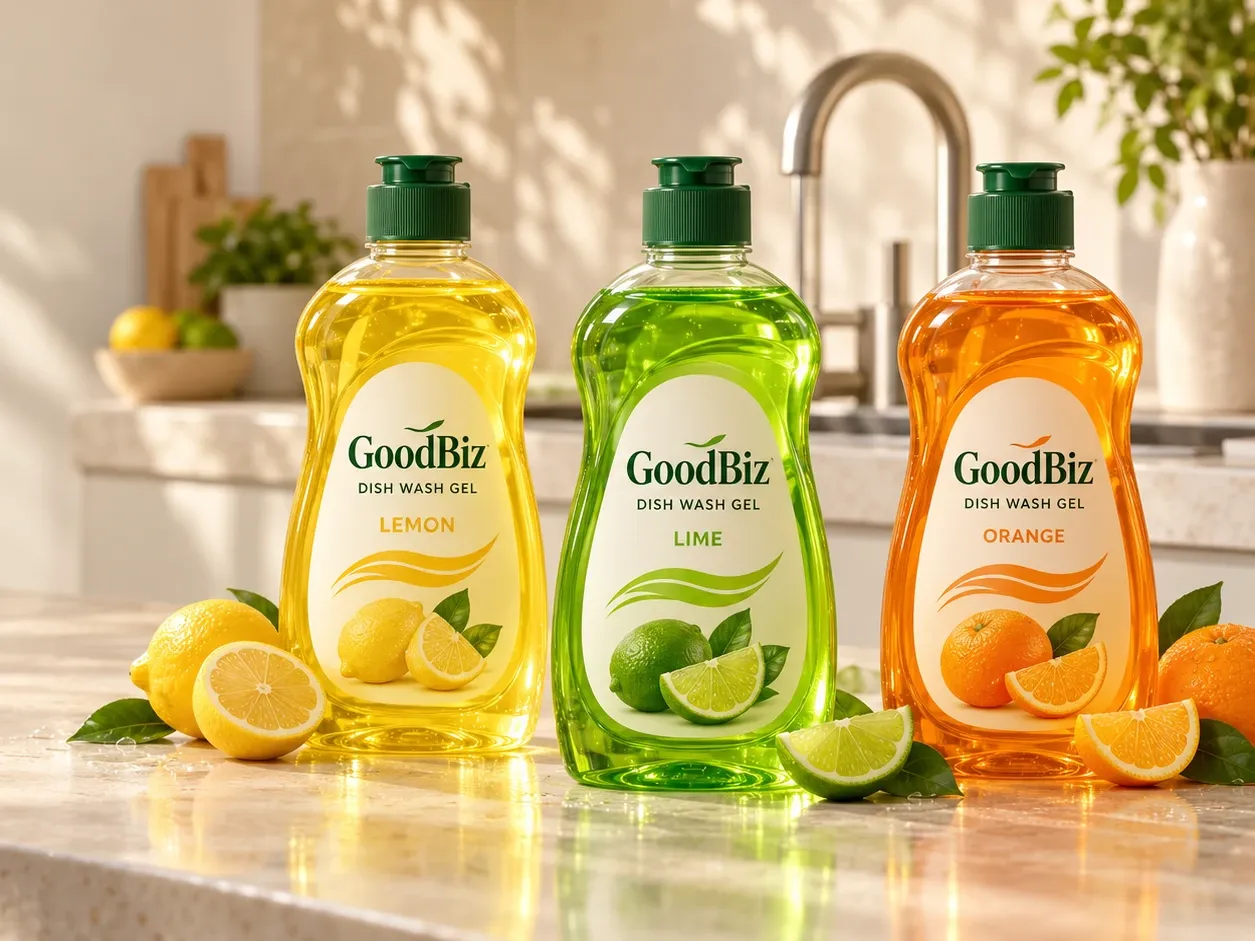
Lemon and lime are the best-known variants, with orange, green apple and unscented or sensitive versions also common. Choose a fragrance your local buyers already associate with kitchen cleanliness, then confirm a sample before production.
Pack sizes
Retail packs usually range from small bottles to 1 litre, with refill pouches popular where bottles are expensive or where shoppers care about plastic. Institutional and re-packing buyers use 5 litre cans, 20 litre carboys and 200 litre drums. The dish wash liquid page lists the typical packs and packaging, including bottles, pouches and jerry cans.
What drives the cost
We do not publish fixed prices in an article, because a price only makes sense for a specific brief. These are the factors that move the number, roughly in order of impact. Treat them as indicative factors, not figures.
- Formula and active matter. Richer formulas use more raw material.
- Pack type. Bottle, cap, label or sleeve and carton all add cost per unit. A refill pouch is usually cheaper per litre than a rigid bottle, while bulk drums cost the least to pack.
- Private label. Custom printing, new artwork plates and a bespoke fragrance can add set-up cost, particularly on smaller runs.
- Order quantity. Larger runs spread set-up cost over more units.
- Freight and insurance. Ocean freight is quoted per container and varies by route and season. Liquids are heavy, so weight, not volume, may fill a container first.
- Terms. FOB, CIF and CFR place different costs on each side, so compare quotations on the same basis.
When you compare suppliers, compare like with like: the same fragrance, active matter, pack and terms.
MOQ and container loading
There is no fixed minimum order quantity for dish wash liquid: trial orders, part loads and mixed containers with other kitchen care products are all quoted. Because liquids are heavy, a full container of retail bottles is a large number of cartons.
As an indication only, our product page notes that a 20 ft container might hold roughly 1,800 to 2,200 cartons of 12 x 500 ml bottles, and a 40 ft roughly 3,800 to 4,400. The real count varies with the bottle shape and the carton size, so we confirm it against your chosen pack.
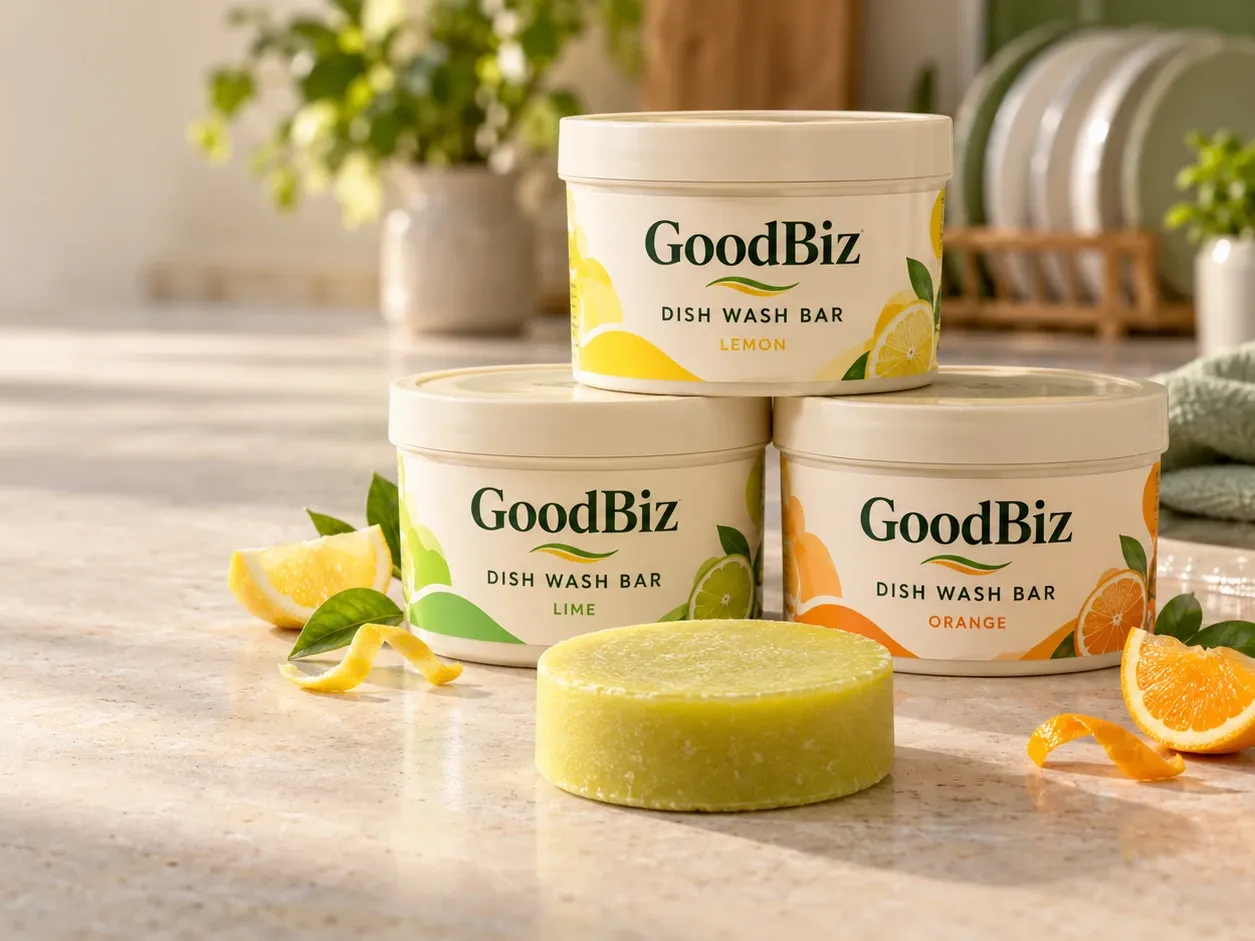
If you are testing the market, a mixed container is often the smartest first order. You can combine dish wash liquid with a dish wash bar, floor cleaner or soap bars from other ranges, so that you trial several lines without filling a container with one product.
Private label for dish wash liquid
Many importers want their own brand. With private label you typically choose:
- your brand name, logo and label or sleeve artwork;
- fragrance and colour;
- liquid or gel texture and active matter level;
- a bottle shape and cap from the manufacturer’s existing moulds;
- a printed master carton.
Custom bottle moulds are a different matter: they take time and a larger commitment, so most first orders use stock bottles with a custom label. Artwork and a sample are approved before bulk production, and lead time can stretch if you request special packaging.
Documents you will need
For each shipment we prepare the standard export documents:
| Document | What it does |
|---|---|
| Commercial invoice | States the goods, value and terms for customs |
| Packing list | Details cartons, weights and marks |
| Certificate of origin | Confirms the goods are of Indian origin |
| Bill of lading | The shipping line’s transport document |
| COA and MSDS | Product quality and safety information, arranged where required |
Your own country may ask for more, such as a product registration, a label approval or an import licence for cleaning products. Check this early with your customs broker, because some markets need the product notified before the goods arrive. Dish wash liquid is generally classified under HSN 3402 50 as a retail washing preparation, and the 8-digit ITC-HS code is confirmed per order. See our guide to HSN codes 3401 and 3402 for the reasoning.
Shipping step by step
- Enquiry. Send the product, fragrance, pack sizes, quantity and destination port.
- Quotation. We return a quote with typical specifications and lead times. Terms offered: FOB, CIF and CFR available; payment terms agreed per order (T/T or LC).
- Samples. Approve the formula, fragrance and, for private label, your artwork.
- Order confirmation. Terms are agreed, and the manufacturer schedules production.
- Production and packing. Typically 3–5 weeks after order confirmation, depending on private-label requirements.
- Documents and loading. We prepare the paperwork while the goods are packed and loaded. Goods are shipped from major Indian ports.
- Transit and clearance. The shipping line carries the container, and your broker clears it at your port.
A word on payment
Payment is agreed per order, by telegraphic transfer (T/T) or letter of credit (LC). A letter of credit gives both sides a formal framework but needs careful document matching, so tell us early if your bank requires one.
Quality and handling tips
- Ask for a pre-shipment sample that matches the production batch, and keep it for reference.
- Check shelf life and storage. Liquids should be stored away from heat and frost. Ask the manufacturer for the recommended shelf life.
- Choose cartons for your climate. Humid ports and long storage call for sturdier, moisture-resistant cartons.
- Plan for leakage risk. Good caps, induction seals and careful palletising reduce leaks on a long voyage.
Common mistakes first-time importers make
- Comparing quotes with different terms, so that a low FOB price hides freight costs.
- Choosing a fragrance from a catalogue without a sample.
- Forgetting local label rules until the goods are on the water.
- Ordering a full container of one fragrance when a mixed load would test the market better.
Where to go next
If you plan to stock more than one kitchen product, a dish wash bar can also work in markets where solid bars are still popular, and our dish wash bar page lists the typical formats. When you are ready, send us your brief and we will reply with a quotation and a recommended pack plan.
Sources
Primary sources for the codes and standards in this guide. Check the current version before you rely on a figure.
- World Customs Organization (WCO): HS Nomenclature 2022 edition: the international six-digit headings and subheadings, including 3401 and 3402.
- Directorate General of Foreign Trade (DGFT): ITC(HS) export and import schedules: India’s 8-digit lines and export policy.
- International Chamber of Commerce (ICC): Incoterms rules: the official definitions of the trade terms used in quotations.