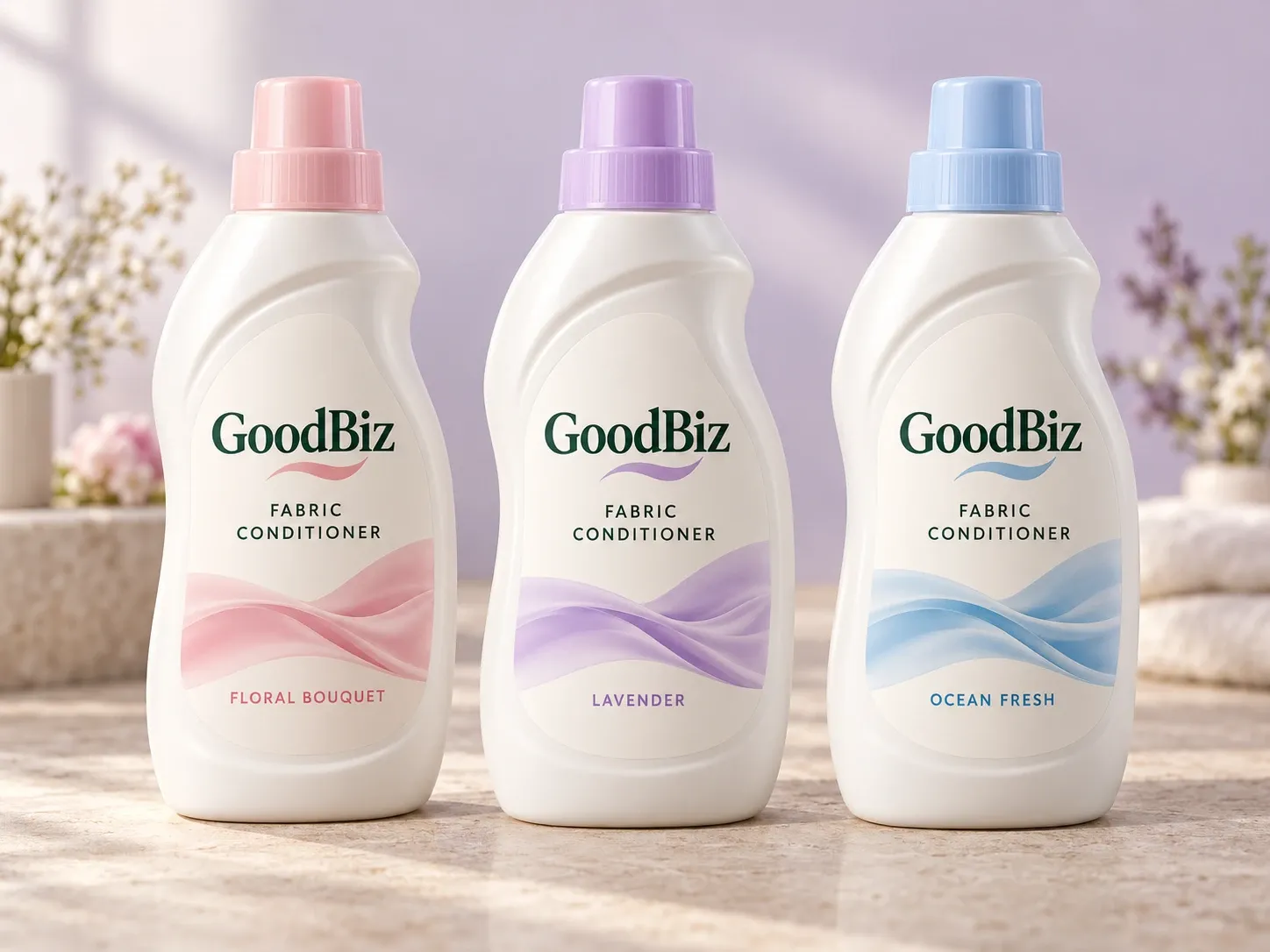
Fabric Softener / Conditioner Exporter & Supplier from India
Fabric softener, also called fabric conditioner, is a liquid added during the final rinse of a wash to leave clothes soft, smooth and fragrant. It works through cationic softening agents that coat the fibres and reduce static. GoodBiz Hygiene sources fabric softener in regular and concentrated grades from vetted Indian manufacturers for export.
HSN 3402 50. Alternative classification noted below
Key facts for buyers
- HSN code
- 3402 50
Fabric softener is commonly classified under 3402 50 as a surface-active preparation, but it is often also classified under 3809 91 (finishing agents for textiles). The correct code depends on the formulation and customs practice in the destination country, so we confirm the full 8-digit code for each order.
- Minimum order quantity
- No fixed minimum. Trial orders, part loads and mixed containers are all quoted, and quantities are agreed per order.
- Private label
- Available. Own brand name, logo and label or sleeve artwork; Fragrance and colour selection; Regular or concentrate positioning; Bottle and cap choice from available moulds; Pouch refill format and printed master carton.
Varieties, pack sizes and packaging
Available varieties
- Floral bouquet
- Lavender
- Ocean fresh
- Rose
- Sensitive, low-fragrance
- Perfume-boost concentrate
Pack sizes
- 500 ml
- 1 L
- 2 L
- 3 L
- 5 L can
- 20 L jerrycan
Packaging options
- PET or HDPE bottle with measuring cap
- Stand-up refill pouch with spout
- HDPE can or jerrycan for 5 L and 20 L
- Master carton of 6 to 12 bottles; drums and IBCs for bulk
What are the typical specifications of fabric softener / conditioner?
Fabric Softener / Conditioner: typical values for export grades. Final values are confirmed with the manufacturer per order.
| Form | Opaque or tinted viscous liquid |
|---|---|
| Active matter (cationic softening agent) | Typical 4-8% regular; typical 10-15% concentrate |
| pH (neat) | Typical 2.5-4.0, acidic |
| Viscosity | Typical 20-200 cP, depending on concentration |
| Colour | Blue, pink, purple, green or white; custom on request |
| Shelf life | Typical 12-18 months in sealed container |
Product overview
Fabric softener is an add-on purchase that grows as households adopt washing machines and want better-feeling, better-smelling laundry. It softens fibres, reduces static and creases, makes ironing easier and leaves lasting fragrance. For importers, it is a higher-margin partner product to detergent, and shoppers tend to be loyal to a favourite scent.
GoodBiz Hygiene is a merchant exporter from India, a GoodBiz Global company, and sources conditioners from established Indian blenders. We do not run blending plants ourselves. Instead we source fabric softener from vetted Indian manufacturers, match the formulation to your requirements and handle export documentation and shipping through a single point of contact.
Grades and formulations
Softeners are built on cationic softening agents, together with water, a thickener, preservative, colour and fragrance. Regular grades usually carry about 4-8% active matter. Concentrates carry roughly 10-15% and are sold as a premium, economical-per-wash option. Sensitive grades use lighter perfume and gentler dyes for skin-conscious households.
Fragrance is the main reason people choose one softener over another. Floral bouquet, lavender, ocean fresh and rose are the most requested scents, and perfume-boost concentrates play on long-lasting freshness. The fragrance, colour and viscosity can be adjusted within the manufacturer’s range to suit your market.
Classification note
Softener sits in a grey area for customs. It is commonly classified under 3402 50, but is often also classified under 3809 91 as a textile finishing agent. The HSN code shown is the 6-digit level, and the full 8-digit ITC-HS code is confirmed for each order so your paperwork matches your destination country’s practice.
Packaging for export
Softener bottles are usually 1 L to 3 L PET or HDPE with a measuring cap, with stand-up refill pouches alongside. Larger buyers take 5 L cans or 20 L jerrycans, and hotels and laundries may take drums. Master cartons hold 6 to 12 bottles. The liquid is dense and the cartons are heavy, so payload sets the container limit.
Private label options
Softener is a fragrance-led category, so the most important private-label decision is the scent and its strength. Concentrate formulas allow a smaller bottle at the same number of washes. Colour is tinted to match the fragrance, and bottle shapes come from stock moulds. A sample is approved before production, and lead time is typically 3-5 weeks after confirmation.
Why source through GoodBiz Hygiene
Softener is judged by smell, so buyers should compare fragrance samples on real cloth rather than in the bottle. GoodBiz Hygiene can arrange fragrance samples from the manufacturer for that purpose. FOB, CIF and CFR are available; payment terms are agreed per order (T/T or LC). Shipments leave from major Indian ports. The HSN code shown is the 6-digit level, and the full 8-digit ITC-HS code is confirmed for each order. Share your fragrance preferences, concentration level and pack sizes and we will return a quotation.
Our fabric softener buying guide covers types, fragrances and pack sizes in more depth, and the laundry care range lists the detergents usually shipped with it.
Last reviewed
Container loading (approx.)
Approximate figures; the final loading plan is confirmed per order.
- 20 ft container
- Approx. 1,100 to 1,400 cartons (1 L x 12), subject to payload limits; varies with pack
- 40 ft container
- Approx. 2,200 to 2,700 cartons (1 L x 12), subject to payload limits; varies with pack
Straight answers.
What is the difference between regular and concentrated softener?
Concentrates carry about two to three times the active matter of regular softeners, so a smaller dose does the same job. They cost more per litre but less per wash, and save freight and shelf space. Many buyers carry both in a good-better range.
Buyer FAQ
Which HS code applies to fabric softener?
Fabric softener is commonly shipped under 3402 50 but is often also classified under 3809 91. The right code depends on the formulation and the destination country's customs practice. We confirm the full 8-digit code for each order, and buyers should check their local tariff with a customs broker.
Buyer FAQ
Can the softener be used in the machine and by hand?
Yes. It is added to the final rinse, either in the machine's softener drawer or into the rinse water for hand washing. It should not be poured directly onto dry clothes, as this can cause staining.
Buyer FAQ
What is the minimum order quantity?
There is no fixed minimum order: trial orders and part loads are quoted per order. Sizes, fragrances and other laundry products can often be mixed in one load, though each private-label design may carry its own minimum.
Buyer FAQ
How should softener be stored?
Keep it sealed, away from direct sun and at moderate temperatures. Cationic liquids can thicken or separate if frozen or overheated, so tell us about your storage conditions when ordering.
Buyer FAQ
Buyer guides for this product
Fabric Softener Buying Guide for Importers: Types, Fragrances and Pack Sizes
What importers should know before buying fabric softener from India: regular vs concentrate, sensitive grades, fragrance choice, pack sizes and storage.
Private Label Cleaning Products: A Step-by-Step Guide for Distributors
How distributors can launch their own cleaning brand from India: choosing the range, briefing a manufacturer, approving samples, artwork, packing and shipping.
Detergent Powder vs Liquid Detergent: Which Sells Better in Your Market?
Powder or liquid laundry detergent? Compare climate, washing habits, machines, price and freight cost per wash to choose the right range for your market.
Related products
All laundry careDetergent Powder
HSN 3402 50Multi-Surface Cleaner
HSN 3402 50
Quote this product.
Tell us the fabric softener / conditioner variety, pack size, quantity and destination port in one line. The enquiry form opens with it written in.